
For those of us who are fortunate to be teachers, the start of a new school year brings a mixture of excitement and trepidation. For me a new year represents renewal, a chance to reboot the system software, to rededicate myself to unlocking the unlimited possibilities of young musicians growing and learning together. Pretty cool gig, right?

Well, that’s the excitement part, but what about trepidation?
During a recent pre-semester lunch with a colleague, the subject of weight came up in the conversation. Both physical weight of a personal nature and metaphorical weight relating to dealing with the ups and downs of a new school year. He was referring to both students and colleagues who, for whatever reason, shift the weight of their load onto you. This can mean not carrying their own weight in terms of departmental responsibilities or of asking you to carry some part of the weight of their mental or physical wellbeing.
Common sense would tell us that taking even a small amount of someone else’s weight adds a little more to our own. Then think about taking on small amounts of weight from many different people and that burden can quickly add up. If not managed properly this added weight can take a toll on your physical and mental wellbeing. Many people I know have an extraordinary capacity for taking on the weight of others, but there is always a limit and unfortunately figuring that out can sometimes happen too late.

This is not to say that investing time and energy into teaching and mentoring students isn’t a worthwhile endeavor or is something to be avoided. It is quite the opposite. These are the pursuits that every teacher lives for. The hope of seeing that one student—the one who has so much potential yet can’t seem to get out of their own way—living up to the promise you see in them long before they do themselves. This is exactly what I signed up for, and I am happy to take on extra weight in that pursuit just like someone did for me once upon a time.
As my friend and I talked, over our burgers and fries, I understood his point and soon saw myself—as one does—at the center of the scenario. When we left the restaurant, the song The Weight popped into my head.
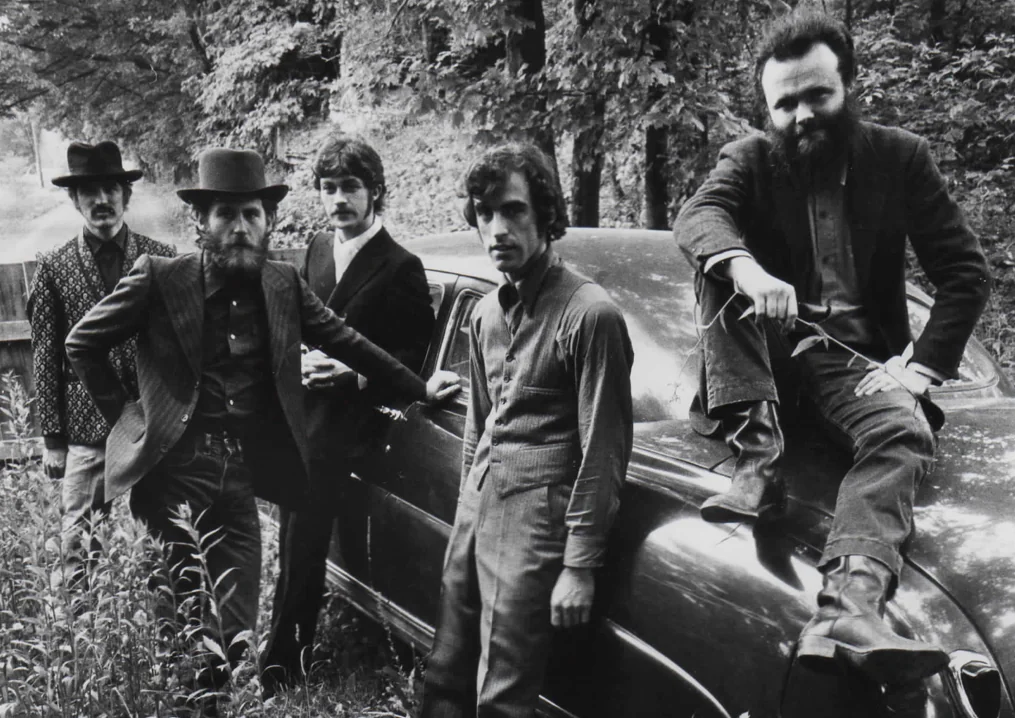
The Weight was released by The Band in 1968. It is about a traveler’s journey to a town called Nazareth and all we know is that he has been asked by his friend Fanny to look up a few people there and give them her regards. But every person he meets makes the task more complicated by asking him for favors of their own which adds a little more “weight” with each encounter. He has taken on this task to somehow alleviate an unknown burden for “Miss Fanny.”
“Take a load off, Fanny
Take a load for free
Take a load off, Fanny
And (and, and)
You put the load right on me”
The Weight—Robbie Robertson
In his analysis of The Weight, singer and songwriter Mitch Bradford states that “you set off looking for something, and on the way, you get turned off course. You get mixed up with ‘The Devil or Crazy Chester,’ and suddenly you’re working toward their aims rather than what you set out to do.”
A.I. distilled the message of The Weight quite succinctly. “The physical and emotional weight in the song represents the inescapable obligations, duties, and heavy expectations that pile up when you try to help everyone around you.” Dang, A.I., way to cut right to the point.
Taking on weight from another person is a common thing we humans do, yet it is important to understand that Investing time and energy into another person can only pay dividends if both parties are contributing an equal amount of energy. My friend would call this transaction “energy in; energy out.” In other words, If the energy being put into solving a problem isn’t equal to the transfer of weight being asked of you, it may be time to shift that weight from yourself onto someone more qualified. Referring a troubled student to a health-care professional is often the best thing you can do for them.
And much like our traveler, the weight of other people can indeed knock you off your own course. This is a lesson that educators learn the hard way, and in many cases, long after it is too late to do anything about it. Exceeding your weight limit too much for too long can cause burnout.
Teachers, counselors, psychiatrists, pastors, therapists, and many other individuals who care deeply about their charges are the most susceptible to varying degrees of burnout. A psychiatrist friend once told me that most every therapist ends up talking to someone else at some point during or at the end of their career to help them lose some of the weight they’ve taken on during their practice (he told me this upon the occasion of his retirement). Even Ted Lasso’s shrink has a shrink. Think about that for a minute.
But I come from a generation of people who, by virtue of the era in which we grew up (the 60s and 70s), have a predisposition to help. Just consider the music we listened to when we were coming of age and it will provide insight into our propensity for taking on the weight of others. Songs such as Lean on Me, With a Little Help From My Friends, Help Me Make It Through the Night, You’ve Got a Friend, Bridge Over Troubled Water, and He Ain’t Heavy, He’s My Brother are just a few of the songs that helped define us as a generation in addition to informing our attitudes about helping others first and everything else second.
In 1969 Glen Campbell sang:
“If you see your brother standing by the road
With a heavy load from the seeds he sowed
And if you see your sister falling by the way
Just stop and say, “You’re going the wrong way”
“You’ve got to try a little kindness
Yes, show a little kindness
Just shine your light for everyone to see
And if you try a little kindness
Then you’ll overlook the blindness
Of narrow-minded people on the narrow-minded streets”
Try a Little Kindness—Curt Sapaugh & Bobby Austin
But in our desire to help we must also remember that there is a danger in thinking that we can “fix” a person who is really struggling. As mentioned above, taking on a little extra weight for a person who is trying to push through a rough patch is a worthy cause, but trying to “fix” someone who is unwilling or unable to match the energy you are expending—the weight you are carrying for them—is a risky proposition.
There comes a point where you realize that only a trained professional can help a person manage their burdens — their own weight. Giving that weight to someone more capable of helping is the best thing you can do for everyone involved.

The bottom line is to never stop asking for help and never stop offering help to anyone who asks, but keep an eye on the scales for when that extra weight becomes too much.
It’s also a good idea to check in with your students, mentees, family, and friends from time to time just to make sure they are in a good space.
One thing to remember is that sometimes all a person might need is a friendly smile, someone to listen, and a nice “cup of pep talk.”

Citations:
Bradford, Mitch. “The Weight” by the Band – History of a Song in 60 Seconds,” YouTube Video, September 15, 2023
Robertson, Robbie, “The Band … the Weight 1969 @ Woodstock live”, YouTube, April 25, 2010
Robertson, Robbie, The Weight, Remastered, Producer, John Simon Mastering Engineer, Dan Hersch Mastering Engineer, Andrew Sandoval, Capitol Records, 2000
Sapaugh, Curt. Austin, Bobby. Try a Little Kindness, Capitol Records, United Records, single recording by Glen Campbell released October 1969