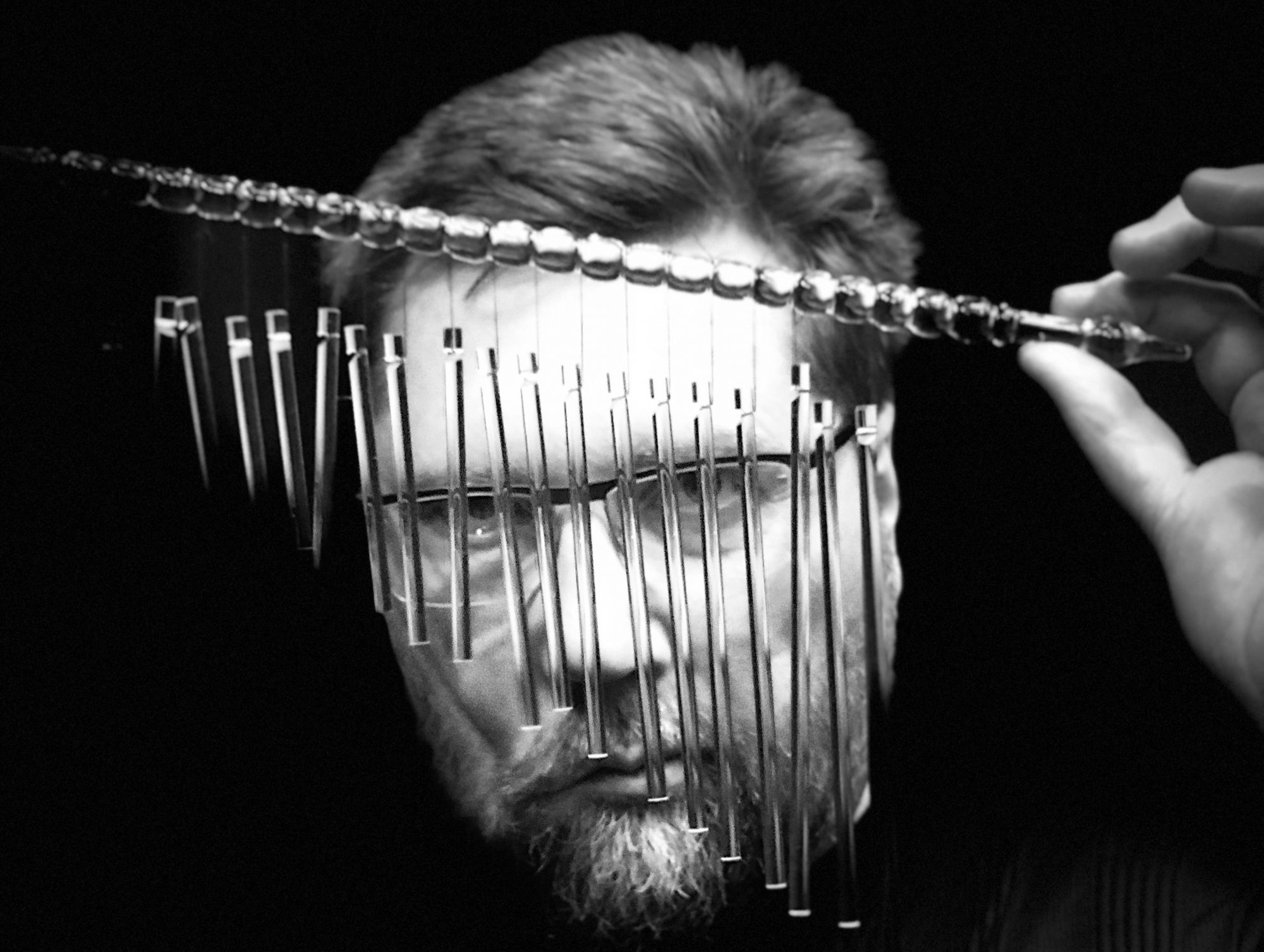
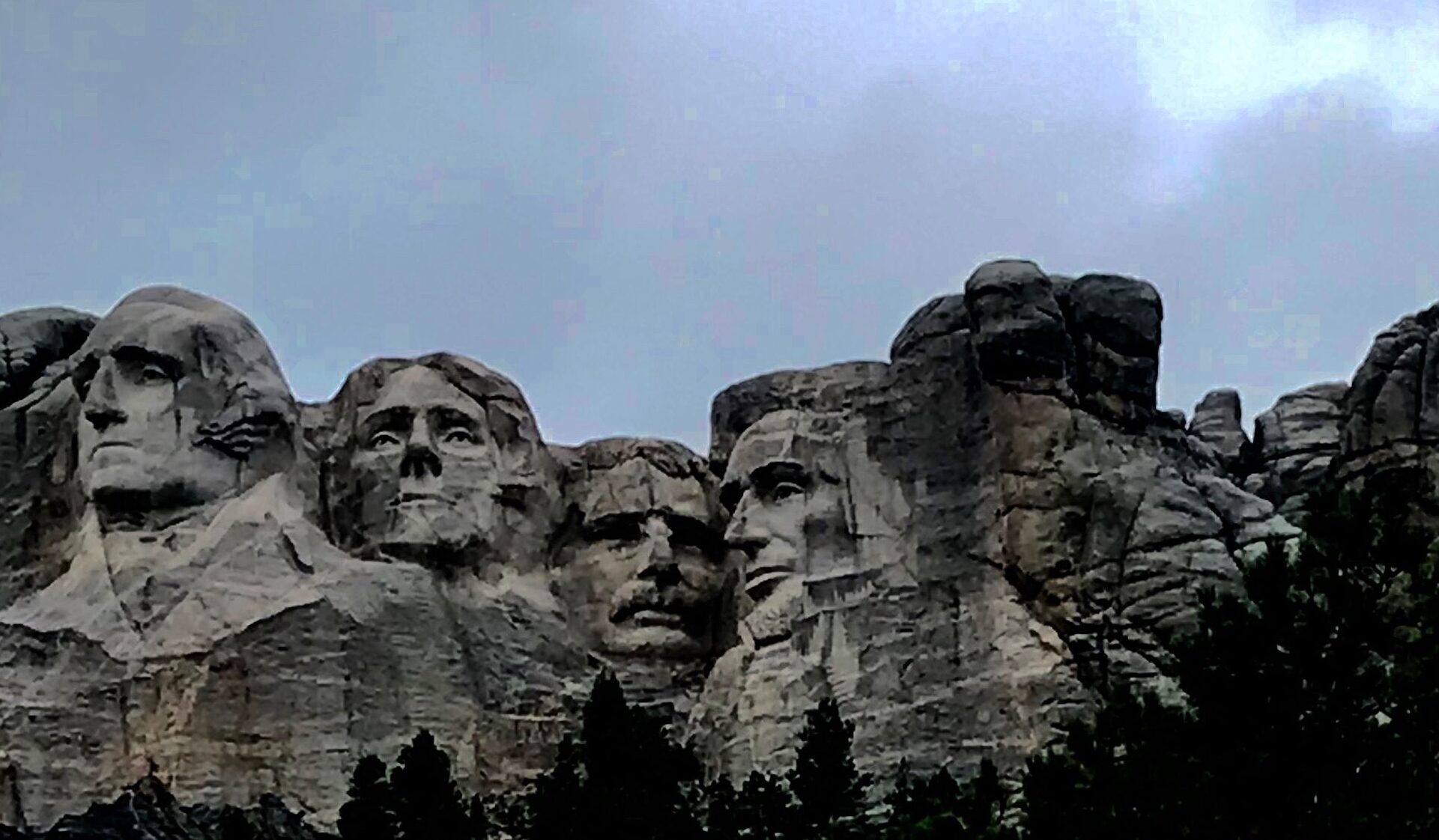
The 4th of July always brings out my patriotic side, and on our 250th even more so. For one thing, I got to experience the Bicentennial as a high school senior in 1976, and I am happy to still be around to celebrate the semiquincentennial. But what does that have to do with how I became a drummer?
Well, like many poor and awkward kids growing up in East Texas, I wanted to find a place to fit in. I tried sports (as you do in Texas) but was not particularly athletic. My academic credentials were less than stellar, and I had begun to fall in with the “wrong crowd” of neighborhood “rough kids.” In hopes of saving me from my unsavory associations, someone suggested that maybe I should join the band. I thought it was a great idea since I was already a fan of the popular trumpet player Herb Alpert, and because I had zero interest in anything else. Maybe it would be cool to play trumpet and be the de facto leader of the band, so I gave it a try.
But as it is often said, an “instrument finds you, not the other way around.” You can force a child to choose the piano but very few will be chosen “by” the piano in return. Turns out it was the same for the trumpet. As you might have guessed, the trumpet did not choose me on band instrument selection night, but the drums somehow did—like it or not.
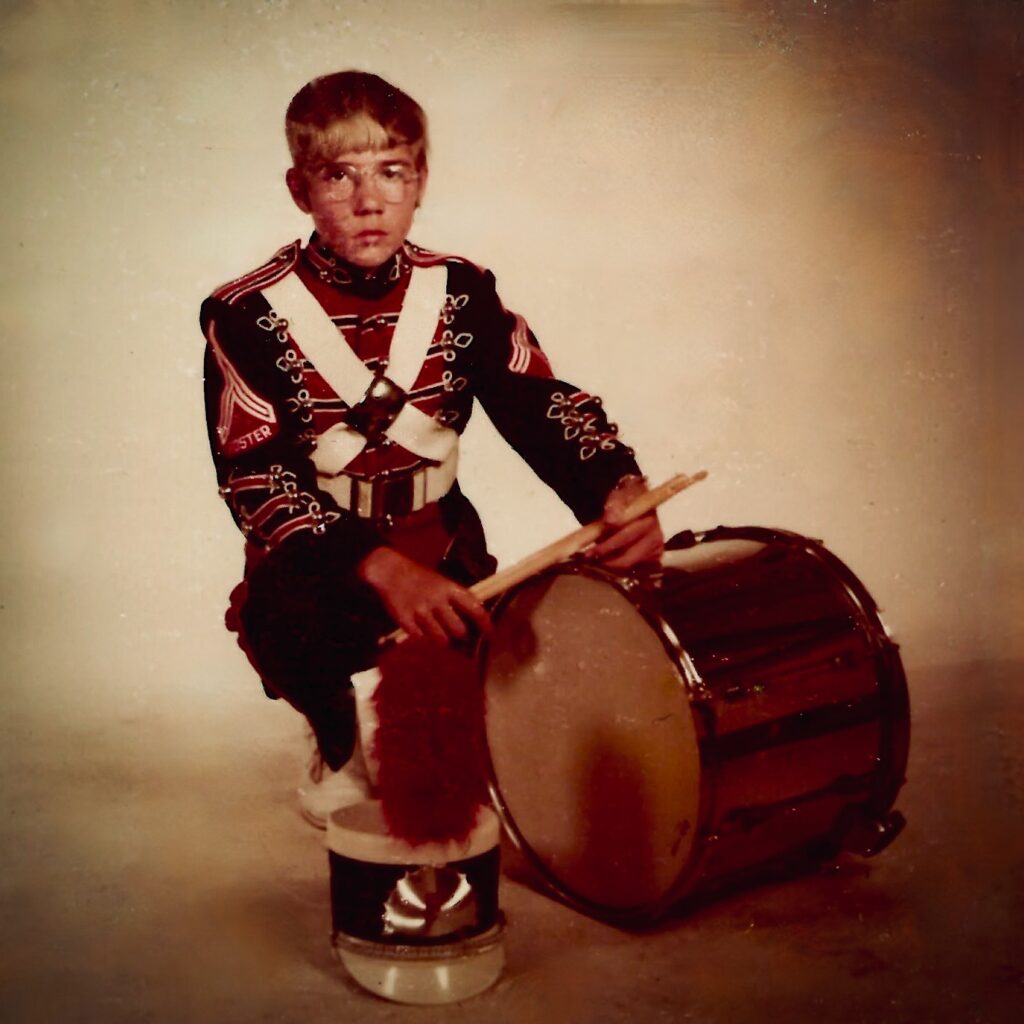
From that day in 1969 forward, I have held a pair of drumsticks (or at least carried them in my back pocket) for well over the generally assumed 10,000 hours thought necessary to acquire mastery of a particular skill. In his Book Outliers: The Story of Success, Malcolm Gladwell called this the “10,000 Hours Rule.” He also considers other factors related to success such as family, culture, access to resources, and desire, however the 10,000 Hours Rule remains a handy marker.
Along the way toward achieving those hours, it eventually occurred to me that being a drummer was somehow baked into my DNA; I just didn’t know it, and neither could I avoid it. But what does that mean exactly—to have drumming in your DNA? No one in my family was or had been a drummer or musician of any kind for that matter. I’m talking about spiritual ancestors. These are people who influenced you or your profession either directly or indirectly. Some are people you know, many are not. Folks who were drummers long before you were born so that you might have the opportunity to become one.
Recently, I found myself scrolling through my Facebook feed when I came across a group of young musicians who were doing a promotional video for their band’s upcoming concert. The video was simple; as the camera panned down the line, each player introduced themselves. The first one said something like, “I’m Alex, I play sax.” The next one said, “I play guitar.” The next, “I’m THE Singer” (about par for the course I suppose), but the last band member looked into the camera and said, “I’m a drummer.” That small moment resonated with me. Without thinking, he was saying “I don’t just play the drums,” he said, “I AM A Drummer.” That’s something entirely different. When you recognize that being a drummer is part of who you are rather than something you simply “do,” it is a powerful self-realization. It’s in your DNA. You can’t take it out and look at it. It’s just there and you feel it, eventually.
I am always proud to be a drummer, but even more so on Independence Day. As the 250th anniversary of our Nation’s birth drew nearer, it got me thinking about the brave drummers of the Revolution and the Civil war. For years I have been fascinated by the role (or roll) that drummers played in the history of our great nation.
The early American drummers have a rich history that I can—and often do—talk about at length. As a teacher, I feel a responsibility to honor the memory of drummers of the past and to pay our respects to them for their many sacrifices in service to our country. I love telling the story of the ancient drummers and their importance; beating out calls and signals during battle, marching troops from place to place, as lifters of morale among the soldiers, and many other duties.
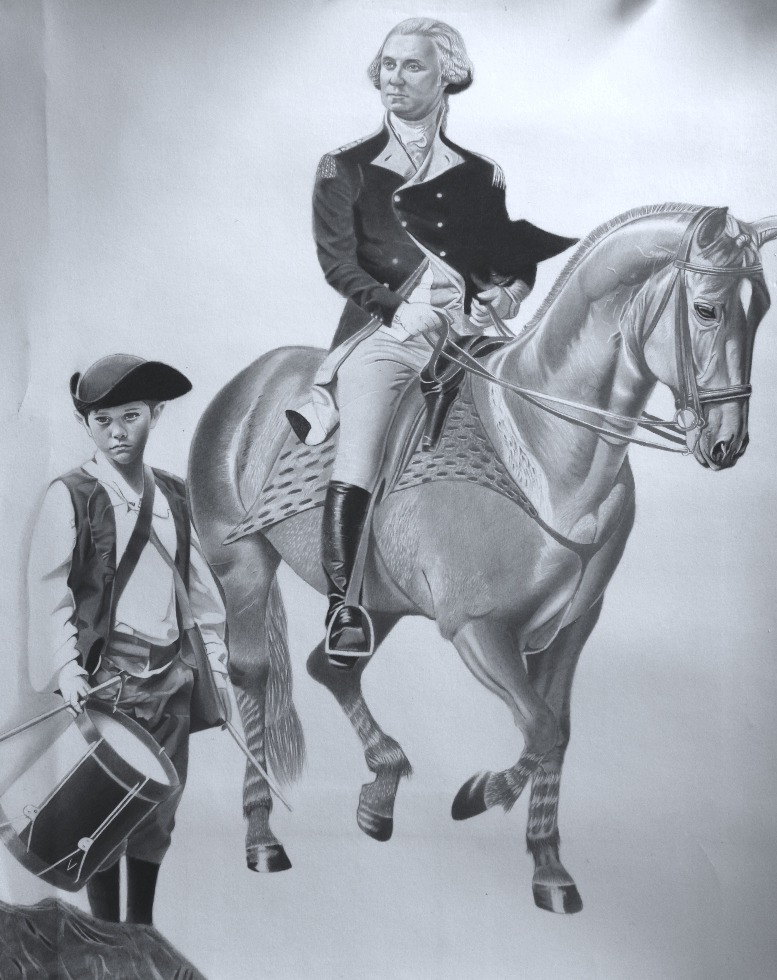
But when telling their story to an audience, the most visceral reaction comes when they learn that the average age of drummers in both the Revolution and the Civil War was 12. These boys were considered too young to do the fighting, so drumming would be the best job for them. Yet as it turns out being a drummer was an even more dangerous proposition. Many of these young men, often known as Washington’s Drummers, were killed on the battlefield by the enemy in an attempt to knock out communications and demoralize the soldiers. When I was 12, I had just been handed my first pair of Ludwig 2B drumsticks and had no clue about what to do with either one of them.
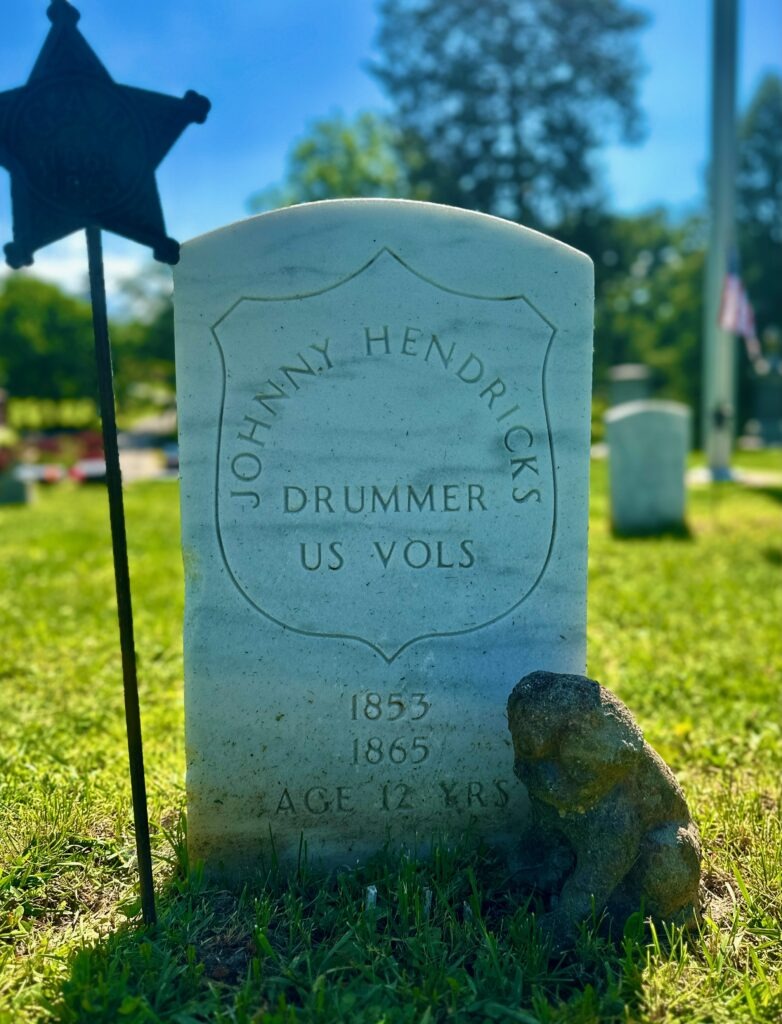
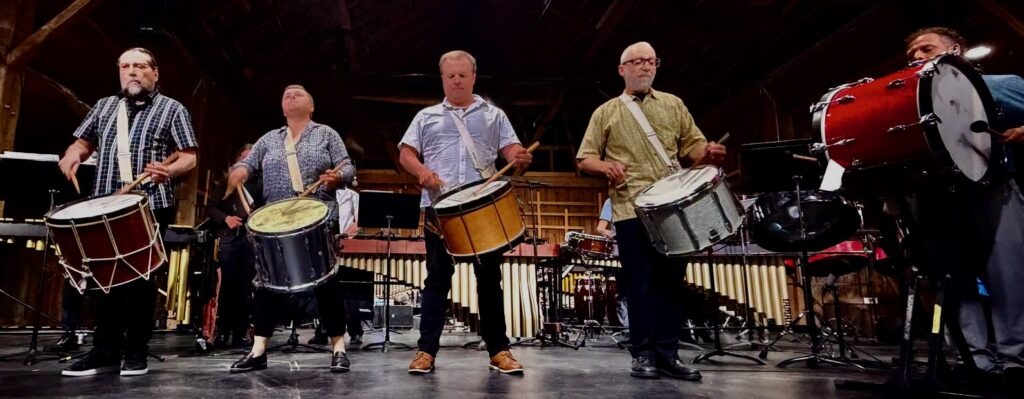
This summer I decided to do some ancient rudimental drumming during our performances at the Birch Creek Music Performance Center in Door County, WI., and as I was planning repertoire for the season, we decided to take a break to attend a local Memorial Day Ceremony in Iowa City. While in the cemetery we decided to pay our respects to some of the Civil War era soldiers buried there. The first headstone we found read: Johnny Hendricks, Drummer, US Vols, 1853-1865, Age 12 Yrs.
Here was empirical evidence of something I had been saying for years, right there in front of me and in my own back yard. Johnny Hendricks lived as a drummer and died as a drummer. He was a drummer—a spiritual ancestor I’d never heard of.
And even though I spend more of my time these days behind the marimba or the vibes, I am still a drummer.
Happy 250th 4th of July!
Citations:
Gladwell, Malcolm. Outliers: The Story of Success, Little, Brown Paperbacks, June 7, 2011, ISBN-10 : 0316017930, ISBN-13 : 978-0316017930
Read more about the revolutionary drummer boys in this blog post by Bill Cahn: