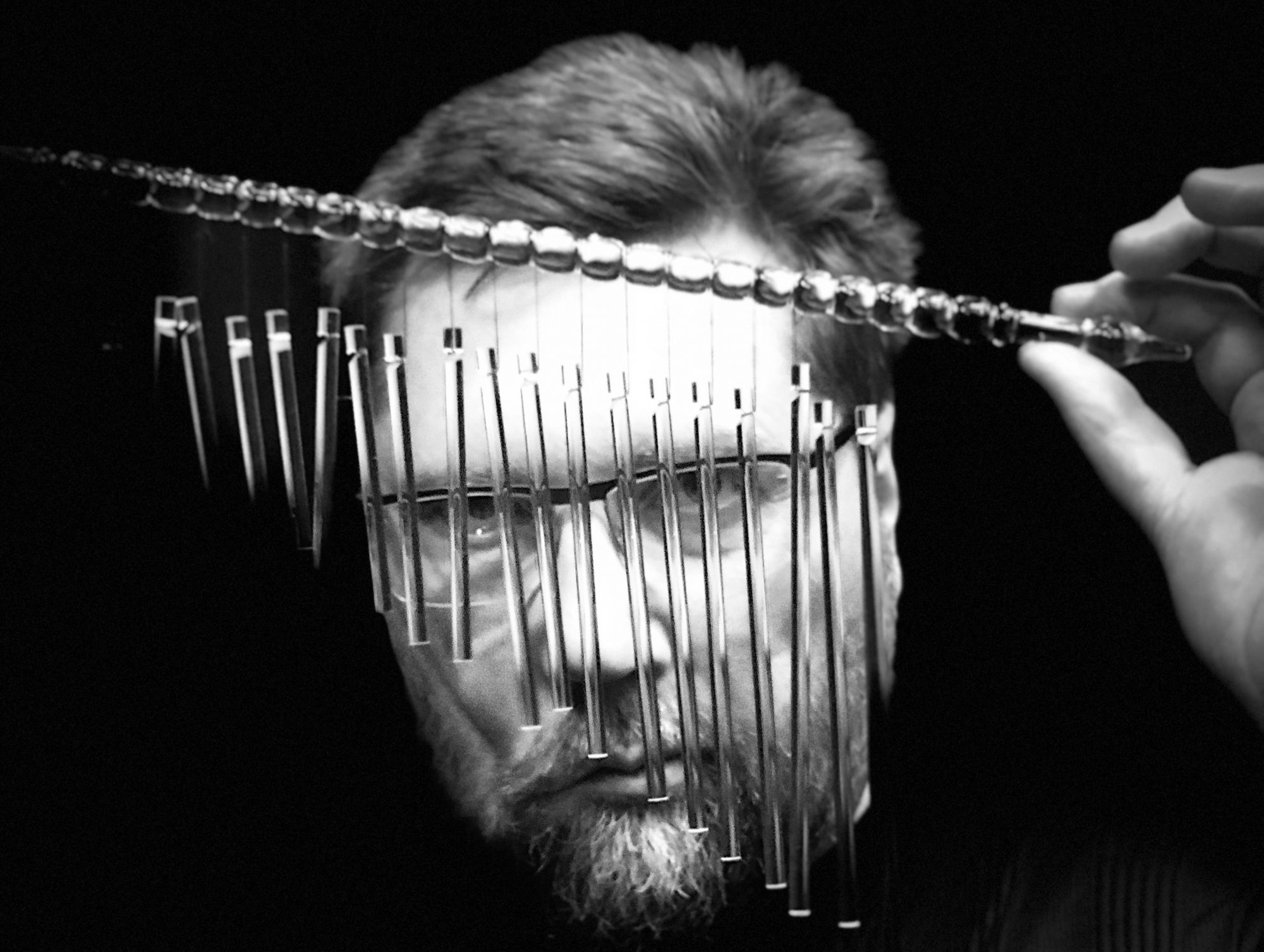
Let’s just go ahead and skip directly to the conclusion. Drummers have always been serious, creative, industrious, funny, and—yes—smart. If this is somehow news to you, please keep reading. If you, or someone you love is a drummer, share this post.
For as long as I can remember, musicians have enjoyed a merry “war of wits” by poking fun at each other with jokes made at the expense of others. No instrument, voice, or conductor is spared from these jovial jabs. Viola and singer jokes perhaps dominate the list, but it’s all in jest—right? —or is it?
Historically, drummers and percussionists (fancy name for a drummer) have always enjoyed a good laugh. We were never afraid to laugh at ourselves or poke fun at others. Unfortunately, people sometimes misinterpret humor as a lack of intelligence, seriousness, or ability. When it comes to drummer jokes one gets the feeling that there is a bit of an edge to these baleful barbs.
Perhaps I’m being oversensitive, but something happened along the way and percussionists began to quietly take offense at these jokes, particularly mean-spirited ones.
I mean, there is no real reason that a “drummer without a girlfriend would necessarily be homeless,” or that “you would know the riser is level when the drool comes out of both sides of the drummer’s mouth.” Well, that’s just plain mean (but still kinda funny).
But can a drummer be both smart and funny?
My long-time mentor Dick Schory (of Percussion Pops Orchestra fame) would tell me that he and his colleagues Bobby Christian, Thomas L. Davis, Tom Brown, and others “were very serious about what we were doing; we just didn’t take ourselves too seriously.” They weren’t afraid to be funny—even silly by modern standards. They could lean into the humor because the musicianship and artistry would speak for itself. It was a given, but it may also have worked against modern percussionists.
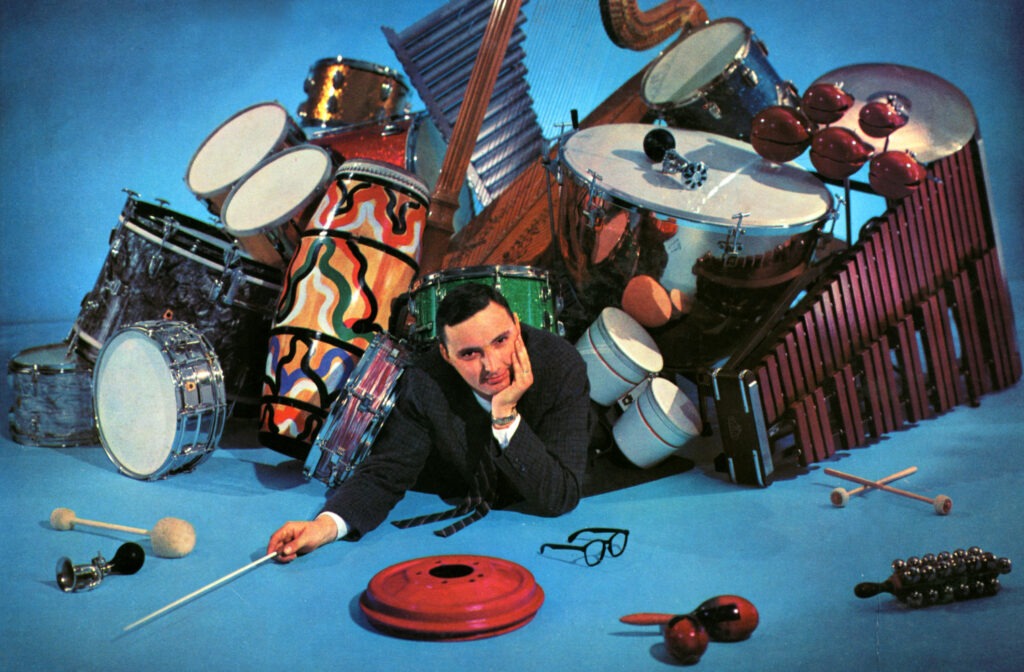
You might think “the percussionist doth protest too much,” but I for one have experienced real discrimination because I was assumed to be just a “dumb drummer.” I’ve known extremely qualified people who have been denied promotions to certain types of positions simply because of such implicit biases.
This type of discrimination has caused people in certain academic positions to forget that they are still drummers at heart. They know deep down they love hitting stuff to make music but wouldn’t dare bring it up at a dinner party at the president’s house. They feel compelled to renounce their heritage—a history that is steeped in the traditions of Vaudeville, Spike Jones, The Percussion Pops Orchestra, PDQ Bach, the Blue Men Group, and many others. What did they all have in common? They possessed a keen sense of comedy, they were accomplished musicians, and they were quite serious about their work.
After I entered the ranks of higher education in 1985 and then as I continued my education as a doctoral student in Percussion Performance in the 1990s, I began to figure out why percussionists were slowly losing their sense of humor. It was time to get “serious.”
As a DMA candidate I was responsible to know everything about the art, craft, history, and lore of percussion but also, everything about classical music writ large including the music of Bach, Beethoven, and The Boys, how many pedals there are on a harp, and other musical minutiae.
It is reasonable to expect that an educated musician would know about music broadly speaking but if you were a violinist much of music history is YOUR history. Was everyone expected to also know the history and development of the marimba, steel pan, or drumset? Probably not.
It occurred to me that percussionists seemed to be held to a different standard, but I was OK with that because I had already developed an intellectual curiosity about music, art, history, languages, culture, and much more. This curiosity fueled my desire to learn for the rest of my life. It also informed my teaching, performing, and mentoring to this day.
It took longer to nearly kill my sense of humor; it was a close call.
Along the way I began to notice that many percussionists share the same passion for erudition as me and it became clear that—hey! — drummers are smart!
Here are some examples:
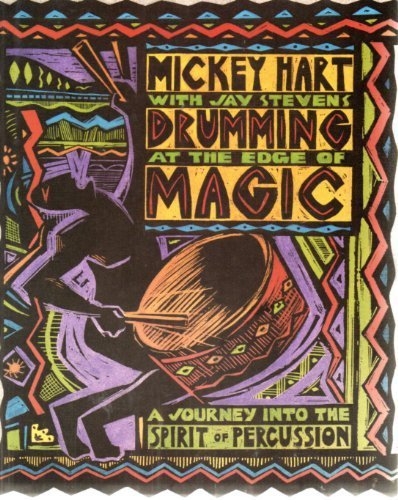
My first exposure to a drummer/scholar was reading Mickey Hart’s books Drumming at the Edge of Magic, Planet Drum, Spirit of Sound, and Songcatchers. Hart was one of the drummers for the grandfathers of the Jam Band movement, the Grateful Dead. He was a rock star who wanted to learn about the history of percussion, the stories, the legends, and the myths. He pursued this knowledge passionately, like a Bonafide Music Scholar. He collected stories and posted them on an enormous timeline of 3” by 5” cards nicknamed “the Anaconda” that encircled the walls inside his barn/studio on his Novato, California ranch. The Anaconda turned into the four books mentioned above.
My friend and duo partner of many years, Mat Britain, and I were inspired to collect quotes about percussion, music, and life as a result of reading Hart’s books. We still collect and share quotes and stories like baseball cards.

Drummers such as David Garibaldi, Steve Smith, and others dug deep into the vocabulary of drummers of the past to develop their own unique voice. Their work was intellectual, thorough, and inspired, and as a result of their efforts, they developed a completely new lexicon of drumming simply by looking back, doing the research and analysis.
In the contemporary percussion world, there is Steven Schick who I met in 2000. He was an alumnus of the University of Iowa where I had recently become the second percussion professor in the history of the school and the successor of his teacher Thomas L. Davis.
Simply put, Schick was an enigma! A polyglot who was the most eloquent and intelligent thinker I had ever met, but like me, he was a drummer, a strange traveler in a hostile land.
But few musicians of any stripe have attained the level of influence on the musical world than that of Steven Schick. He set himself apart early on as the creator of an entire genre of musical performance—one of his own design. Dumb drummer—I think not.

He shared his artistic philosophy in his seminal book The Percussionist’s Art: Same Bed, Different Dreams, which has become a standard text for composers, percussionists, and lovers of new music. In his review of the book, composer Steve Reich wrote: “Just Imagine, as Steven Schick points out, you (the percussionist) and your friend (the cellist) are walking along. She with her extremely expensive and tradition-hallowed cello, and you’re on the way to the junkyard to pick out the most clangorous brake drum you can find and from there to garden supplies to find really nice-sounding flowerpots.”
There’s that self-deprecating humor again, but don’t let it fool you!
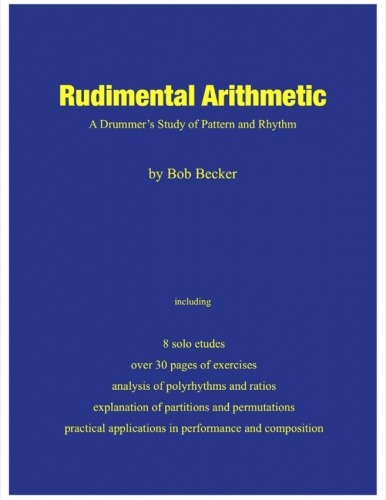
Throughout my professional career, I’ve enjoyed many great opportunities to share ideas, meals, and (more than a few) drinks with some of the most brilliant minds in percussion. I’ve argued well into the wee-small-hours with percussion scholars such as Bob Becker (whose amazing book, Rudimental Arithmetic, I helped to edit), on topics from the arcane corners of rudimental drumming to the fringes of contemporary music.
These were stimulating, Illuminating, and edifying conversations that helped to shape my thinking about percussion as a noun (the art of), a verb (to percuss), an adjective (percussive) or an adverb (to strike percussively). These conversations clearly transcended anything remotely relating to “how many drummers it might take to screw in a light bulb.” *
I’m not saying that these conversations were devoid of humor. Far from it because percussionists can move easily from the sublime to the ridiculous, but we are just more guarded these days about who we allow to hear it.
The younger generation also holds great potential. One example among many is Professor Michael Compitello of Arizona State University. His writing is incredibly thoughtful and thought provoking. We’ve struck up a friendship based on our shared love of all things percussive (adjective: relating to or produced by percussion). His upcoming book will be a deep dive into several important topics, and I look forward to reading and responding more to the early drafts of his work. I wonder if he knows any drummer jokes…?
In the early 2000s, I discovered that by becoming one of the few tenured professors of percussion at a Research-One (R1) Institution who also held a completed doctorate in music that I would begin to be called upon to serve as an outside reviewer of other percussion faculty.
In twenty-plus years I have completed evaluations of over forty percussion professors at major universities across the country. What have I learned? Quite a lot actually. I often find that most percussion professors are overworked, misunderstood, and (to quote Shakespeare for a third time) “altogether misprized.”
This is because otherwise musically educated people don’t seem to know what goes into making music on percussion instruments. For this reason, I call what we do as percussionists “Attempting the Absurd.” Imagine making beautiful and compelling music on a pile of wooden or metal slats with yarn covered balls on sticks. That about sums it up for me. Read more about that here:
It is amazing how often a musician will begin a conversation with me by saying “I don’t know anything about percussion.” My response is almost always the same; “you know about music, right? You should judge us on the same criteria as you would any musician.”
The majority of those I have reviewed are producing robust levels of creative and scholarly work—recordings, videos, books, commissions, blogs, lectures, or podcasts. For the most part, they speak and write eloquently about their work as musicians who play percussion, and they teach everything from percussion studio to marching band, new music ensembles, jazz courses, world music, history of rock ‘n roll, and much more.
It is encouraging, however, that many of the drummers/percussionists I know still enjoy a good joke and have not lost their sense of humor entirely—yet. I hope that never happens but as Bob Dylan would say, “The Times They Are a-Changin’.”
So, if you hear us make a self-deprecating drummer joke, don’t be confused. There is method behind the madness; a rich history mixed with quite a bit of intellectual rigor, discipline, creativity, wit, humility, and—yes—humor.
My experience is that many of the smartest people I know are some combination of writers, thinkers, humorists, scholars, poets, artists, comedians, and, as it happens, drummers.
The conclusion? Well, you know it already. Drummers are funny and smart, and the world is better for it.
One more thing before we go. The fact is that being funny takes wit, intelligence, creativity, and timing. There is an ancient show-biz truism that says, “dying is easy, comedy is hard,” but that discussion will have to wait for another day.
*In case you were wondering, “it takes ten drummers to screw in a light bulb; one to do the job and nine more to say that Steve Gadd could do it better.”

The above cartoon was created by my good friend Steve Smeltzer, whose work has appeared in publications such as Sweetwater Music Calendars, The Wall Street Journal, Chicago Health Magazine, Reader’s Digest, Saturday Evening Post, Good Housekeeping, and Better Homes and Gardens. He is the author of a book titled Fort Wayne in a Nutshell: A Cartoon Retrospective. Steve is also a darn good drummer and teacher!
Citations:
Hart, Mickey. Drumming at the Edge of Magic: A Journey into the Spirit of Percussion, 1 January 1990, Harper San Francisco, ISBN 978-0062503749
Hart, Mickey. Planet Drum: A Celebration of Percussion and Rhythm, 1 January 1999, Harper Collins, ISBN 978-0062503978
Hart, Mickey. Spirit into Sound: The Magic of Music, 1 October 1999, Grateful Dead Books, ISBN 1888358238
Hart, Mickey. Kostyal, KM. Songcatchers: In Search of the World’s Music, 1 June 2003, National Geographic, ASIN B0002UVA5W
Schick, Steven. The Percussionist’s Art: Same Bed, Different Dreams, 15 May 2006, University of Rochester Press, ISBN 978-1580462143
Becker, Bob. Rudimental Arithmetic (A Drummer’s Study of Pattern and Rhythm), 17 September 2008, Keyboard Percussion Publications, ISBN 0982112661
Smeltzer, Steven. Fort Wayne in a Nutshell: A Cartoon Retrospective, 6 July 2024, ISBN 979-8332358968
Smeltzer, Steven. Cartoon “Yeah, that’s good, but Gadd could do it better.” © 2025