Drummers are Funny, But Are They Smart?

Let’s just go ahead and skip directly to the conclusion. Drummers have always been serious, creative, industrious, funny, and—yes—smart. If this is somehow news to you, please keep reading. If you, or someone you love is a drummer, share this post.

For as long as I can remember, musicians have enjoyed a merry “war of wits” by poking fun at each other with jokes made at the expense of others. No instrument, voice, or conductor is spared from these jovial jabs. Viola and singer jokes perhaps dominate the list, but it’s all in jest—right? —or is it? 

Historically, drummers and percussionists (fancy name for a drummer) have always enjoyed a good laugh. We were never afraid to laugh at ourselves or poke fun at others.  Unfortunately, people sometimes misinterpret humor as a lack of intelligence, seriousness, or ability. When it comes to drummer jokes one gets the feeling that there is a bit of an edge to these baleful barbs. 

Perhaps I’m being oversensitive, but something happened along the way and percussionists began to quietly take offense at these jokes, particularly mean-spirited ones. 

I mean, there is no real reason that a “drummer without a girlfriend would necessarily be homeless,” or that “you would know the riser is level when the drool comes out of both sides of the drummer’s mouth.” Well, that’s just plain mean (but still kinda funny).

But can a drummer be both smart and funny? 

My long-time mentor Dick Schory (of Percussion Pops Orchestra fame) would tell me that he and his colleagues Bobby Christian, Thomas L. Davis, Tom Brown, and others “were very serious about what we were doing; we just didn’t take ourselves too seriously.” They weren’t afraid to be funny—even silly by modern standards. They could lean into the humor because the musicianship and artistry would speak for itself. It was a given, but it may also have worked against modern percussionists.
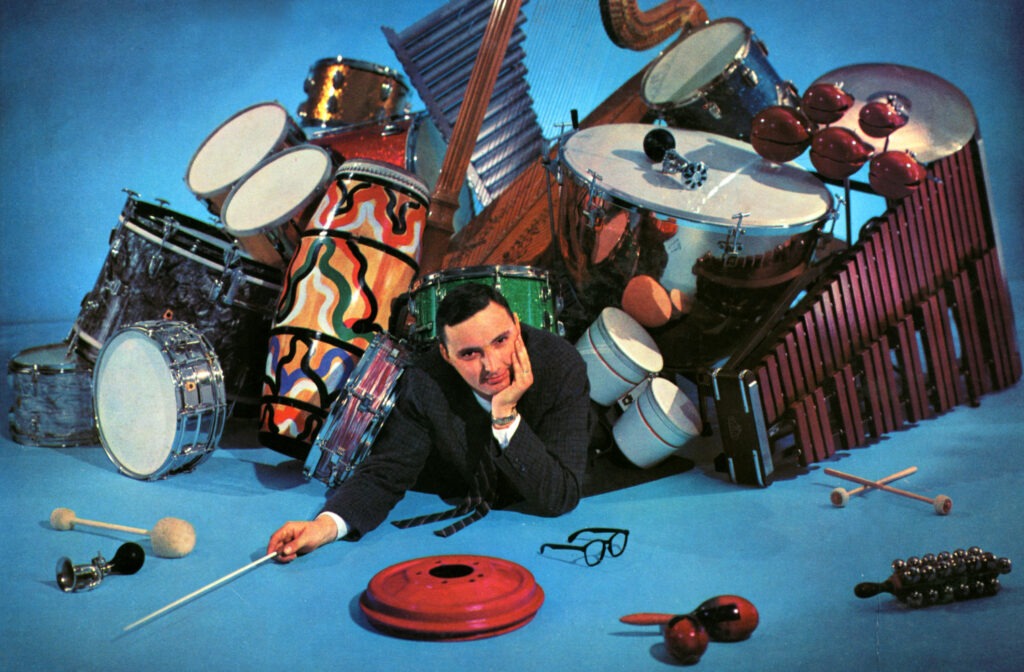
Photo shoot from the album Music for Bang, Barooom, and Harp by Dick Schory and the Percussion Pops Orchestra. Schory under a ponderous pile of percussion.

You might think “the percussionist doth protest too much,” but I for one have experienced real discrimination because I was assumed to be just a “dumb drummer.” I’ve known extremely qualified people who have been denied promotions to certain types of positions simply because of such implicit biases. 

This type of discrimination has caused people in certain academic positions to forget that they are still drummers at heart. They know deep down they love hitting stuff to make music but wouldn’t dare bring it up at a dinner party at the president’s house. They feel compelled to renounce their heritage—a history that is steeped in the traditions of Vaudeville, Spike Jones, The Percussion Pops Orchestra, PDQ Bach, the Blue Men Group, and many others. What did they all have in common? They possessed a keen sense of comedy, they were accomplished musicians, and they were quite serious about their work.  


After I entered the ranks of higher education in 1985 and then as I continued my education as a doctoral student in Percussion Performance in the 1990s, I began to figure out why percussionists were slowly losing their sense of humor. It was time to get “serious.”

As a DMA candidate I was responsible to know everything about the art, craft, history, and lore of percussion but also, everything about classical music writ large including the music of Bach, Beethoven, and The Boys, how many pedals there are on a harp, and other musical minutiae. 

It is reasonable to expect that an educated musician would know about music broadly speaking but if you were a violinist much of music history is YOUR history. Was everyone expected to also know the history and development of the marimba, steel pan, or drumset? Probably not.

It occurred to me that percussionists seemed to be held to a different standard, but I was OK with that because I had already developed an intellectual curiosity about music, art, history, languages, culture, and much more. This curiosity fueled my desire to learn for the rest of my life. It also informed my teaching, performing, and mentoring to this day. 

It took longer to nearly kill my sense of humor; it was a close call.

It took longer to nearly kill my sense of humor, but it was a close call. Having fun with my colleague Jean Francois Charles on clarinets on a Dick Schory classic, Baby Bossa Nova.

Along the way I began to notice that many percussionists share the same passion for erudition as me and it became clear that—hey! — drummers are smart! 


Here are some examples:
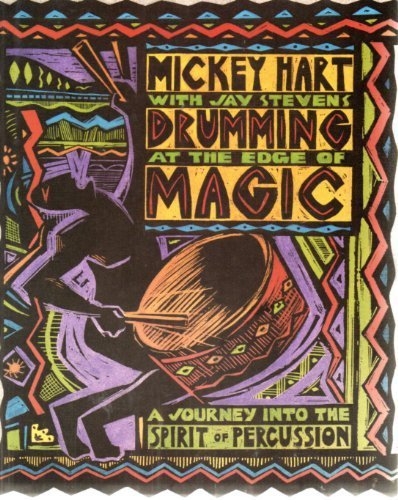
Drumming at the Edge of Magic, Mickey Hart

My first exposure to a drummer/scholar was reading Mickey Hart’s books Drumming at the Edge of MagicPlanet DrumSpirit of Sound, and Songcatchers. Hart was one of the drummers for the grandfathers of the Jam Band movement, the Grateful Dead. He was a rock star who wanted to learn about the history of percussion, the stories, the legends, and the myths. He pursued this knowledge passionately, like a Bonafide Music Scholar. He collected stories and posted them on an enormous timeline of 3” by 5” cards nicknamed “the Anaconda” that encircled the walls inside his barn/studio on his Novato, California ranch. The Anaconda turned into the four books mentioned above.

My friend and duo partner of many years, Mat Britain, and I were inspired to collect quotes about percussion, music, and life as a result of reading Hart’s books. We still collect and share quotes and stories like baseball cards.

Gary Burton quote, oil on canvas by Alexis Alduenda.

Drummers such as David Garibaldi, Steve Smith, and others dug deep into the vocabulary of drummers of the past to develop their own unique voice. Their work was intellectual, thorough, and inspired, and as a result of their efforts, they developed a completely new lexicon of drumming simply by looking back, doing the research and analysis.

In the contemporary percussion world, there is Steven Schick who I met in 2000. He was an alumnus of the University of Iowa where I had recently become the second percussion professor in the history of the school and the successor of his teacher Thomas L. Davis. 

Simply put, Schick was an enigma! A polyglot who was the most eloquent and intelligent thinker I had ever met, but like me, he was a drummer, a strange traveler in a hostile land. 

But few musicians of any stripe have attained the level of influence on the musical world than that of Steven Schick. He set himself apart early on as the creator of an entire genre of musical performance—one of his own design. Dumb drummer—I think not.

The Percussionist’s Art, Steven Schick

He shared his artistic philosophy in his seminal book The Percussionist’s Art: Same Bed, Different Dreams, which has become a standard text for composers, percussionists, and lovers of new music. In his review of the book, composer Steve Reich wrote: “Just Imagine, as Steven Schick points out, you (the percussionist) and your friend (the cellist) are walking along. She with her extremely expensive and tradition-hallowed cello, and you’re on the way to the junkyard to pick out the most clangorous brake drum you can find and from there to garden supplies to find really nice-sounding flowerpots.” 

There’s that self-deprecating humor again, but don’t let it fool you!

Throughout my professional career, I’ve enjoyed many great opportunities to share ideas, meals, and (more than a few) drinks with some of the most brilliant minds in percussion. I’ve argued well into the wee-small-hours with percussion scholars such as Bob Becker (whose amazing book, Rudimental Arithmetic, I helped to edit), on topics from the arcane corners of rudimental drumming to the fringes of contemporary music. 
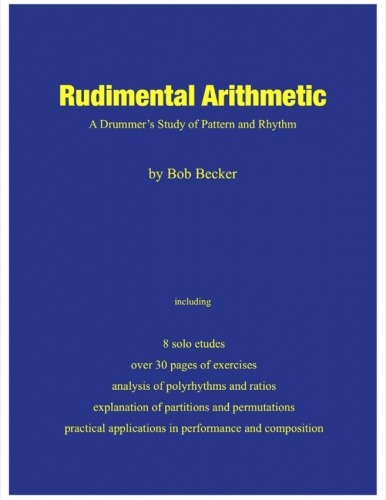
These were stimulating, Illuminating, and edifying conversations that helped to shape my thinking about percussion as a noun (the art of), a verb (to percuss), an adjective (percussive) or an adverb (to strike percussively). These conversations clearly transcended anything remotely relating to “how many drummers it might take to screw in a light bulb.” *

I’m not saying that these conversations were devoid of humor. Far from it because percussionists can move easily from the sublime to the ridiculous, but we are just more guarded these days about who we allow to hear it.

The younger generation also holds great potential. One example among many is Professor Michael Compitello of Arizona State University. His writing is incredibly thoughtful and thought provoking. We’ve struck up a friendship based on our shared love of all things percussive (adjective: relating to or produced by percussion). His upcoming book will be a deep dive into several important topics, and I look forward to reading and responding more to the early drafts of his work. I wonder if he knows any drummer jokes…?

In the early 2000s, I discovered that by becoming one of the few tenured professors of percussion at a Research-One (R1) Institution who also held a completed doctorate in music that I would begin to be called upon to serve as an outside reviewer of other percussion faculty.

In twenty-plus years I have completed evaluations of over forty percussion professors at major universities across the country. What have I learned? Quite a lot actually. I often find that most percussion professors are overworked, misunderstood, and (to quote Shakespeare for a third time) “altogether misprized.” 

This is because otherwise musically educated people don’t seem to know what goes into making music on percussion instruments. For this reason, I call what we do as percussionists “Attempting the Absurd.” Imagine making beautiful and compelling music on a pile of wooden or metal slats with yarn covered balls on sticks. That about sums it up for me. Read more about that here:

It is amazing how often a musician will begin a conversation with me by saying “I don’t know anything about percussion.” My response is almost always the same; “you know about music, right? You should judge us on the same criteria as you would any musician.”

The majority of those I have reviewed are producing robust levels of creative and scholarly work—recordings, videos, books, commissions, blogs, lectures, or podcasts. For the most part, they speak and write eloquently about their work as musicians who play percussion, and they teach everything from percussion studio to marching band, new music ensembles, jazz courses, world music, history of rock ‘n roll, and much more. 

It is encouraging, however, that many of the drummers/percussionists I know still enjoy a good joke and have not lost their sense of humor entirely—yet. I hope that never happens but as Bob Dylan would say, “The Times They Are a-Changin’.”

So, if you hear us make a self-deprecating drummer joke, don’t be confused. There is method behind the madness; a rich history mixed with quite a bit of intellectual rigor, discipline, creativity, wit, humility, and—yes—humor.

My experience is that many of the smartest people I know are some combination of writers, thinkers, humorists, scholars, poets, artists, comedians, and, as it happens, drummers. 

The conclusion? Well, you know it already. Drummers are funny and smart, and the world is better for it.

One more thing before we go. The fact is that being funny takes wit, intelligence, creativity, and timing. There is an ancient show-biz truism that says, “dying is easy, comedy is hard,” but that discussion will have to wait for another day.

*In case you were wondering, “it takes ten drummers to screw in a light bulb; one to do the job and nine more to say that Steve Gadd could do it better.”

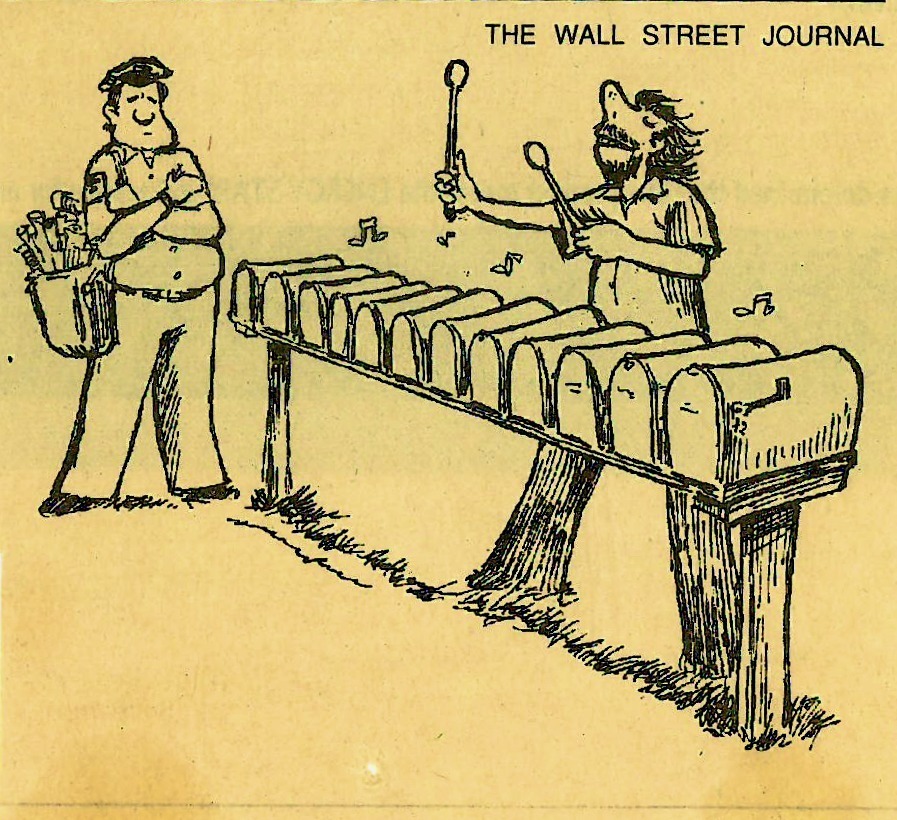
The above cartoon was created by my good friend Steve Smeltzer, whose work has appeared in publications such as Sweetwater Music Calendars, The Wall Street Journal, Chicago Health Magazine, Reader’s Digest, Saturday Evening Post, Good Housekeeping, and Better Homes and Gardens. He is the author of a book titled Fort Wayne in a Nutshell: A Cartoon Retrospective. Steve is also a darn good drummer and teacher!

Citations:

Hart, Mickey. Drumming at the Edge of Magic: A Journey into the Spirit of Percussion, 1 January 1990, Harper San Francisco, ISBN 978-0062503749

Hart, Mickey. Planet Drum: A Celebration of Percussion and Rhythm, 1 January 1999, Harper Collins, ISBN 978-0062503978

Hart, Mickey. Spirit into Sound: The Magic of Music, 1 October 1999, Grateful Dead Books, ISBN 1888358238

Hart, Mickey. Kostyal, KM. Songcatchers: In Search of the World’s Music, 1 June 2003, National Geographic, ASIN B0002UVA5W

Schick, Steven. The Percussionist’s Art: Same Bed, Different Dreams, 15 May 2006, University of Rochester Press, ISBN 978-1580462143

Becker, Bob. Rudimental Arithmetic (A Drummer’s Study of Pattern and Rhythm), 17 September 2008, Keyboard Percussion Publications, ISBN 0982112661

Smeltzer, Steven. Fort Wayne in a Nutshell: A Cartoon Retrospective, 6 July 2024, ISBN 979-8332358968

Smeltzer, Steven. Cartoon “Yeah, that’s good, but Gadd could do it better.” © 2025
Attempting the Absurd; Achieving the Impossible; and Why Not?

If you are a percussionist, and you think about things way too much, as I apparently do, it might occur to you that the very idea of playing beautiful and compelling music on an amalgam of bits and bobs of wood and metal is something really quite absurd. If you aren’t a percussionist, or even a musician, you might feel the same way, therefore a little explanation might be of help to everyone involved.

Since the beginning of time, humans have desired to make and play musical instruments. Many consider the human voice to be the first musical instrument, yet there are differing opinions. In his book Drumming at the Edge of Magic, Grateful Dead drummer and writer, Mickey Hart gives his theory that “[i]n the beginning was noise. And noise begat rhythm. And rhythm begat everything else.” “Everything” in this scenario includes the rhythmic vibration of the vocal cords that produced speech and eventually singing. He goes on to say that “[t]his is a cosmology a drummer can live with. Strike a membrane with a stick, the ear fills with noise—unmelodic, inharmonic sound. Strike it a second time, a third, you’ve got rhythm.” 

The oldest handmade musical instrument in the world is said to be a 60,000 year old flute made by Neanderthals (who else, would make a flute before a drum?). The National Museum of Slovenia, where it is housed, describes the instrument as being “made from the left thighbone of a young cave bear and has four pierced holes. Musical experiments confirmed findings of archaeological research that the size and the position of the holes cannot be accidental—they were made with the intention of musical expression.” 

But how and why did humans come up with the idea of making music on inanimate objects in the first place? Maybe the people who invented musical instruments did so because they couldn’t sing? Or maybe not. For whatever reason, many of earth’s inhabitants are compelled to make music on instruments, and they search, tirelessly, to find or create the technique or the technology to make that happen. From Ctesibius of Alexandria’s creation of the organ in the third century BC, to Garage Band or Pro Tools today, musicians have looked to technology to help them make music. 

The existential need for music making often compels humans to find ways to make music even in the face of oppression or poverty as in the case of the people of Trinidad and Tobago who created two musical instrument genres; tamboo bamboo, a form of music making using bamboo stalks cut to different lengths to accompany singing; and the National Instrument of Trinidad, the steel pan.

Musicians search for any type of conveyance into the ears (and hearts) of those who might hear their sounds and enjoy them. They hope to free the inner voice that is compelled to find a way to connect with its audience.

Some conveyances, however, connect with their audiences better than others.

In the case of mallet percussion instruments, the notion that repeatedly striking a collection of tuned wooden planks, steel bars, or aluminum slats, with yarn-covered-balls-on-sticks, could create a pleasing musical sound seems ridiculous at best and futile at worst, yet as percussionists, we attempt to do it every day. 

From the humble beginnings of mallet percussion, which includes the xylophones of Africa, the European Strohfiedel, and the marimbas of Central America, mallet players have attempted to amuse, entertain, and move their listeners with these simple instruments. In the 1920s, the xylophone was a novelty instrument that was often referred to by its zen-like nickname, “the woodpile.” Its repertoire was drawn from every type of music that captured the imagination of the performers. Playing music on a pile of wood (the essence of the xylophone) seems outrageous when you think about it. 

Just playing a simple four-part chorale on a marimba is one of the most challenging things to perform, simply because the instrument was never meant to do such things. Attempting to produce the illusion-of-sustain by means of a tremolo (roll) can be a blister-inducing, frustrating, and exhausting experience for a marimba player. 

When you further consider that playing anything on a mallet instrument other than idiomatic music is a stretch to begin with, things get even more dicey. For instance, who among us has the requisite birthright to play Bach? Well, depending on who you ask; practically no one! But we percussionists like to play Bach, as well as many other types of classical and non-classical music, that were never intended for the marimba, such as jazz or popular music.

So, if these things are so difficult to do, why bother? It’s simple; we are driven to do so.

Some are more driven than others I suppose.

It is often said that an instrument finds you, not the other way around. It has been said that you can force a child to choose the piano but very few will be chosen “by” the piano in return. I came to percussion almost completely by accident having fully intended to become the next Herb Alpert (the charismatic trumpet player and band leader of the 1960s). But that is a story for another day. Once an instrument chooses you, it soon becomes your passion to play on it the music that speaks to you—it becomes a musical imperative.

I’m a big fan of instrumental musicians who take on different types of music and recast it in their own image. Musicians such as Bill Frisell, Jake Shimabukuro, Dick Schory and the Percussion Pops Orchestra, and the Ventures (arguably, the best-selling instrumental Rock band in music history) have all inspired me in different ways. 

The Ventures were a guitar based group of the 1960s (and beyond) who were famous for their numerous and varied recordings. When inducting them into the 2008 class of the Rock & Roll Hall of Fame, presenter John Fogerty said “the Ventures have gone on to record over 250 albums. Now days some of us would be happy to sell 250 albums.”

The Ventures philosophy was that if you were going to do an instrumental cover of someone else’s tune, then you needed to find a way to make it sound like a completely new composition. In their words, it had to be “Venturized.” As much as 90% of the music they recorded were covers of other people’s music. But the covers were so creative, and in many instances so different from the original, that most people thought they were the band’s original compositions. Their biggest hits such as Walk, Don’t RunWipeoutHawaii 5-0, and Pipeline were all covers!

Hawaiian ukulele artist Jake Shimabukuro plays a repertoire that ranges from classic Hawaiian folk songs to his original compositions, and covers of the music he grew up listening to. He famously performs a version of Queen’s Bohemian Rhapsody on ukulele. Jake also cleverly reimagines music from Michael Jackson, George Harrison, and others, and you can hear in his performances how much he loves and respects this music. He says “my mother taught me three chords on the uke and I was “hooked.” He was chosen by the ukulele. Then, he set out to imbue the music he loved with his own vision. He does things with the ukulele that the ukulele was never meant to do. Right On!

The Britain Moore Duo (BMD), my steel pan and marimba duo of the last 35 years, also tends to work from covers of other people’s music—often against the advice and admonishment of our mentors. We call our covers “BMD Treatments.” One of our most popular covers is of the Gershwin classic Summertime. We used an Afro-Caribbean 12/8 groove and then curiously never played the melody of the tune until the final chorus, which always causes a few head tilts from the audience.

But loving a piece of music and being able to make it sound good on your own instrument can be a problem. How do you know if it will work? Sometimes a performer’s love for a piece of music blinds them to the reality that they are unable to capture the essence of it on their instrument. 

I am lucky to be in a position in my performing career that my repertoire has evolved to include only the music that speaks to me personally. Along the way I have developed a sort-of litmus test to determine if a piece of music I love can be translated to the instruments that have chosen me (those absurd mallet percussion instruments).

The Composer Test:

If a composer were to hear you performing their composition, would they think you were mocking it? Would Mozart be insulted by your performance or would he be inspired to run home and write a new piece for you and your instrument? Think about how you would feel about your version if the composer was sitting in the audience.

What about vaudeville, parody, and humor in music? There are lots of examples of arrangements that are meant to be funny takes or send-ups of otherwise serious music. In this case, you just have to play it flawlessly and then hope that the composer has a good sense of humor.

Inventory:

To begin, a quick inventory of the notes and essential elements will tell you if you have what you need to perform a piece of music that you love. Even if the answer is no, there are ways to make things work. In classical or contemporary music, it is possible to do some note reassignments or octave shifting as long as the general direction of a line is not interrupted by doing so. I personally don’t mind transposing entire pieces (although some of my colleagues take issue with that practice). 

The ukulele version of Jake Shimabukuro’s Bohemian Rhapsody has some pretty cool note reassignments but the inventory of notes and essential elements of the original are all there, lending themselves to the creation of an imaginative rendition of a ubiquitous song.

Listen, hear, and embrace:

It should go without saying that one should always listen to how your music sounds, however, we can get so caught up in the process of invention that we might be listening without really “hearing.” We continue to hold the original version of the music in our heads and not listen critically enough to our own interpretation. 

It can be a difficult admission to realize that we are simply unable to make a particular piece of music sound good—at least not yet. Perhaps a few more years of practice and a little more musical maturity will make the difference the next time around. This has happened to me on many occasions (also a story for another day). But if you try and fail, it’s OK, because as Herb Alpert would say, “the beauty of music making isn’t in attaining perfection because you can never get there. That’s the seductive part of it.”

It is important to embrace the true sound of your instrument which includes both the instrument’s advantages and disadvantages. But this can only be done with honest critical listening to how you and your instrument sound today, and by asking yourself if your arrangement is transcendent.

Does it transcend?

Audiences have different reactions to hearing music performed out of context. If I play a pop song on the marimba or vibes, some in the audience will recognize a familiar tune immediately. If I play a standard song like Moon River, someone might indicate their recognition with a knowing laugh or a soft “ahh.” Others will simply enjoy the arrangement and be attracted to the sound but will come up after the show and ask, “what was the name of that song you played?” Taken out of context and without the words, a good arrangement should transcend the original and become something both familiar and new, just as the Ventures tried to do. Simply put, does your version have its own intrinsic beauty that transcends the original? Does it need the lyrics in order to be meaningful? In many cases, the answer is no. Again Herb Alpert hits it out of the park, when he says “people don’t listen with their ears, they listen with their soul.”

So, I encourage you to continue to pursue the music that is in your head and in your heart regardless of how crazy it may seem because, as M. C. Escher wrote; “Only those who attempt the absurd will achieve the impossible.”

Here is a playlist of  some of the covers that I’ve enjoyed creating:

Citations:

Drumming at the Edge of Magic: a Journey into the Spirit of Percussion
Mickey Hart with Jay Stevens and Fredric Lieberman, Harper Collins, 1990

National Museum of Slovenia
https://www.nms.si/en/collections/highlights/343-Neanderthal-flute

Classic History: The History of the Pipe Organ,
http://www.classichistory.net/archives/organ

Herb Alpert Is (documentary film)
https://www.herbalpertis.com